
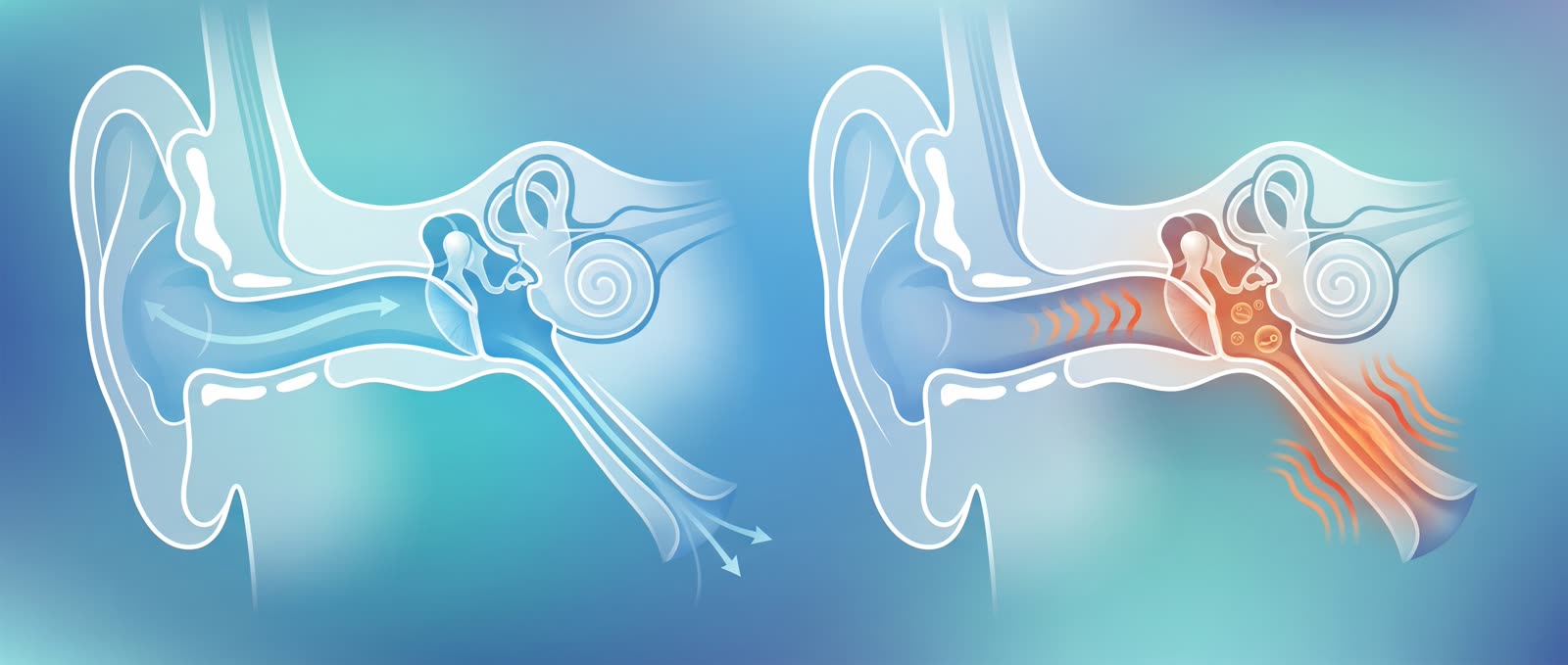
Eustachian tube dysfunction is one of the most common reasons people seek help for persistent ear pressure, muffled hearing, and that frustrating blocked sensation that will not go away. When the tiny canals connecting your middle ear to your throat become swollen or stuck shut, pressure builds, fluid collects, and everyday sounds become frustratingly unclear. At Ear to Hear in Wesley Chapel, our licensed hearing specialists pinpoint exactly what is blocking your eustachian tubes and guide you to trusted relief - from simple home techniques to professional treatment options.
Key Takeaways
- Eustachian tube dysfunction (ETD) occurs when the canals connecting your middle ear to the back of your throat become blocked or fail to close properly
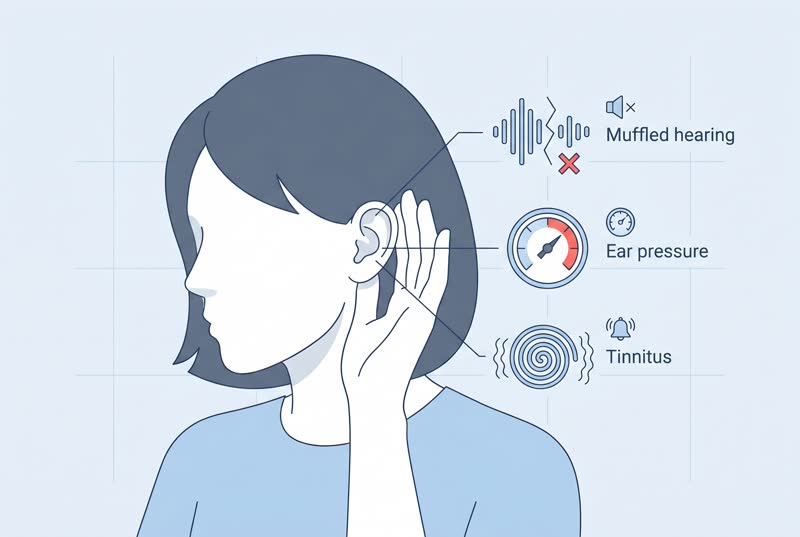
- Common symptoms include persistent ear pressure, muffled hearing, tinnitus, and a feeling of fullness that affects daily conversations
- Most mild cases resolve on their own, but symptoms lasting beyond two weeks call for a trusted hearing specialist evaluation
- Treatment ranges from simple home remedies (Valsalva maneuver, nasal spray) to ear tube surgery for chronic dysfunction
What Is Eustachian Tube Dysfunction - And Why It Matters for Your Hearing
The eustachian tube is a narrow canal - roughly 35mm long in adults - that connects the middle ear space to the nasopharynx (the upper throat behind the nose). When it is working properly, this tube opens briefly during swallowing, yawning, or chewing to equalize pressure between the middle ear and the outside environment. It also helps drain fluid and mucosal lining secretions away from the middle ear.
Eustachian tube dysfunction - sometimes abbreviated ETD - develops when these tubes become blocked, swollen, or otherwise fail to function as they should. When the tube does not open properly, negative pressure builds in the middle ear. Over time, this can draw fluid into the middle ear space, creating that unmistakable sensation of fullness, popping sounds, and hearing loss that makes conversations difficult to follow.
ETD affects people of all ages but is especially common in children (whose eustachian tubes are shorter and more horizontal) and adults with allergies or chronic sinus issues. The good news: most cases are highly treatable when you understand the cause.
5 Common Causes Behind Your Blocked Eustachian Tubes
Anything that inflames or obstructs the eustachian tube opening can lead to dysfunction. Here are the five most common culprits:
Allergies and Sinus Congestion Inflame the Pathway
Seasonal allergies and chronic sinusitis cause mucosal lining inflammation throughout the nasal passages and eustachian tube openings, making it harder for the tube to open and close properly. If your ears clog every spring or fall, allergies are likely the underlying trigger.
Colds and Respiratory Infections Create Swelling
Colds, flu, and sinus infections produce swelling and excess mucus that can physically block the eustachian tube, preventing pressure equalization and fluid drainage. This is the most common cause of short-term ETD.
Altitude Changes Overwhelm Ear Pressure
Rapid altitude changes - flying, scuba diving, or driving through mountains - can overwhelm the eustachian tube's ability to equalize pressure quickly enough, resulting in barotrauma. The good news: this type of ETD usually clears within hours once you land or descend.
Structural Issues Block the Tube Long-Term
Deviated septum, nasal polyps, enlarged adenoids, or a naturally narrow eustachian tube can contribute to chronic dysfunction that keeps coming back. In some cases, prior head or neck surgery may affect the tube's function.
Patulous Eustachian Tube: When It Stays Open
In a less common condition called patulous eustachian tube, the tube stays constantly open rather than closed. This causes an entirely different set of symptoms - autophony (hearing your own breathing and voice loudly) - but falls under the same umbrella of tube dysfunction. A hearing specialist can determine which type you have.
7 Signs Your Ear Pressure Is Eustachian Tube Dysfunction
The hallmark signs of eustachian tube dysfunction are hard to ignore. If you experience several of the following, it is worth being evaluated by a trusted hearing specialist:
| Symptom | Description |
|---|---|
| Persistent ear pressure | that does not respond to swallowing or yawning |
| Muffled hearing | or a feeling like you are listening underwater |
| Ear fullness | or a sensation of blockage that affects conversations |
| Popping, clicking, or crackling | sounds when swallowing or moving your jaw |
| Tinnitus | ringing, buzzing, or whooshing in the affected ear |
| Mild ear pain | or discomfort, especially with altitude changes |
| Fluid drainage | from the ear (if the eardrum has ruptured from pressure) |
Children with ETD may tug at their ears, show irritability, or have difficulty with balance. The middle ear pressure prevents the eardrum from vibrating normally, which causes that characteristic muffled quality that makes it hard to hear clearly.
4 Proven Home Remedies to Clear Eustachian Tube Dysfunction
For mild, recent-onset ETD, these dependable home techniques can help the tube open and restore normal pressure - no special equipment needed:
The Valsalva Maneuver: Fast Pressure Relief
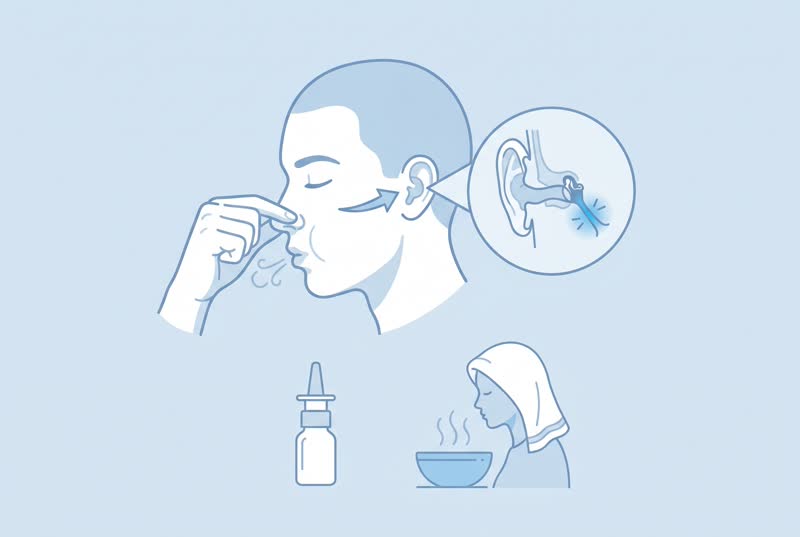
Pinch your nose closed, close your mouth, and gently blow - as if you are trying to pop your ears. This forces air through the eustachian tube to equalize pressure. Be gentle - too much force can damage the eardrum. This technique works in minutes for altitude-related ETD.
Swallowing and Yawning: The Simplest Approach
Deliberately swallow, chew gum, or yawn to activate the muscles that open the eustachian tube. This is the simplest and safest approach, and often the most effective for mild cases after a cold or flight.
Nasal Irrigation and Steam: Clear the Congestion
A saline nasal spray or gentle steam inhalation can reduce inflammation in the nasal passages and eustachian tube openings, making it easier for the tube to function. This works especially well when allergies or sinus congestion are the culprit.
Over-the-Counter Decongestants: When Simple Methods Are Not Enough
Nasal decongestant sprays (used for no more than 3 days to avoid rebound congestion) or oral decongestants can reduce swelling and help the tube open. Antihistamines may help if allergies are the underlying trigger. Always follow package directions.
How to Massage the Eustachian Tube: A Simple Technique
Some people find gentle massage around the ear and jaw area helps relieve ETD symptoms by stimulating the muscles around the tube. Here is how to try it:
- Place your fingertips just in front of your ear opening, near the temporomandibular joint (TMJ)
- Apply gentle circular pressure while slowly opening and closing your mouth
- Move your fingers down along the side of your neck toward the throat, maintaining gentle pressure
- Repeat 5-10 times on each side
This technique may help stimulate the muscles and tissues around the eustachian tube, promoting drainage and opening. It is not a substitute for professional treatment, but it can complement other remedies for added relief.
Does Eustachian Tube Dysfunction Go Away on Its Own?
For most people - yes. Acute ETD caused by a cold or altitude change typically resolves within a few days to two weeks as the underlying inflammation subsides. The eustachian tube resumes its normal open-and-close cycle, fluid drains, and hearing returns to normal.
However, chronic eustachian tube dysfunction - symptoms lasting more than 3 months - is less likely to resolve without intervention. Chronic ETD may require professional evaluation and personalized treatment, including:
| Treatment Option | Description |
|---|---|
| Prescription nasal steroids | to reduce persistent inflammation |
| Ear tube surgery | (tympanostomy tubes) to ventilate the middle ear and allow fluid to drain |
| Balloon dilation | a newer minimally invasive procedure that expands the eustachian tube opening |
| Treating underlying causes | allergy management, polyp removal, or adenoid surgery |
If your symptoms persist beyond a few weeks, a licensed hearing specialist can determine whether your ETD requires medical intervention or whether watchful waiting is appropriate.
Ready to Break Free from Ear Pressure?
Our licensed hearing specialists can evaluate your eustachian tube dysfunction and create a personalized treatment plan. Schedule a free comprehensive hearing test today.
Book Your Free Hearing TestHow Professionals Treat Persistent Eustachian Tube Dysfunction
When home remedies are not enough, a licensed hearing specialist or ENT doctor can offer targeted treatments that deliver dependable relief:
Prescription Medications Target Chronic Inflammation
Prescription-strength nasal steroid sprays (like fluticasone or budesonide) can reduce chronic inflammation in the eustachian tube lining more effectively than OTC options. Oral steroids may be used for severe cases.
Ear Tube Placement Restores Ventilation
A tiny ventilation tube (tympanostomy tube) is placed through the eardrum under local or general anesthesia. This tube allows the middle ear to stay aerated and prevents fluid from accumulating. Tubes typically fall out on their own after 6-18 months, providing lasting relief.
Balloon Eustachian Tuboplasty: A Minimally Invasive Option
A catheter with a small balloon is threaded through the nose into the eustachian tube opening. The balloon is inflated to dilate the tube, then removed. This procedure has shown promising results for adult eustachian tube dysfunction with minimal recovery time.
Addressing Structural Causes for Long-Term Relief
If nasal polyps, a deviated septum, or enlarged adenoids are contributing to ETD, surgery to address these structural issues may be recommended. A trusted health care provider can determine the best approach based on your specific anatomy.
5 Ways to Prevent Eustachian Tube Dysfunction from Coming Back
While you cannot always prevent ETD, these proactive strategies can significantly reduce your risk:
| Prevention Strategy | Details |
|---|---|
| Manage allergies proactively | Use antihistamines or nasal steroids during allergy season before symptoms affect your ears |
| Stay hydrated | Thin mucus drains more easily through the eustachian tube |
| Practice pressure equalization | when flying - Chew gum, swallow frequently, or use filtered earplugs during descent |
| Avoid smoking and secondhand smoke | Smoke irritates the mucosal lining of the eustachian tube. For ongoing ear health, consider scheduling a hearing evaluation to catch issues early |
| Treat sinus infections promptly | Do not let congestion linger for weeks before seeking help |
When to See a Hearing Specialist for Ear Pressure
Schedule an appointment with a trusted hearing specialist if you experience any of these warning signs:
- Symptoms that last longer than two weeks
- Hearing loss that does not improve
- Severe ear pain or fluid draining from the ear
- Frequent episodes of ETD that affect your quality of life and ability to hear clearly
- Dizziness or balance problems
Early evaluation prevents the complications of untreated eustachian tube dysfunction - including chronic fluid in the middle ear, persistent hearing loss, and in rare cases, eardrum retraction or cholesteatoma formation.
At Ear to Hear in Wesley Chapel, our team provides comprehensive hearing evaluations and can assess whether your ear pressure and hearing symptoms are related to ETD or another condition. We offer free hearing tests at our Florida, Illinois, and Missouri locations, with multiple brand options and risk-free trials to help you find the right solution without pressure.
Your Eustachian Tube Dysfunction Questions Answered
Try the Valsalva maneuver (pinch your nose and gently blow), swallow or yawn repeatedly, use a saline nasal spray, or try steam inhalation. Over-the-counter decongestants can help if congestion is the cause. If symptoms persist beyond two weeks, a licensed hearing specialist can evaluate the cause and recommend personalized treatment.
Apply gentle circular pressure in front of your ear near the TMJ while slowly opening and closing your mouth. Then glide your fingers down the side of your neck toward the throat. Repeat 5-10 times per side. This may help stimulate the muscles around the eustachian tube for temporary relief, but it is not a replacement for professional treatment if symptoms persist.
In most cases, yes - acute ETD from a cold or altitude change typically resolves within a few days to two weeks. However, chronic ETD (symptoms lasting 3+ months) is less likely to clear on its own and may require professional treatment such as prescription nasal steroids, ear tube surgery, or balloon dilation. A trusted hearing specialist can help you determine the right approach.
An ENT may prescribe nasal steroid sprays, place ventilation tubes (tympanostomy) through the eardrum to allow middle ear drainage, perform balloon eustachian tuboplasty to dilate the blocked tube, or address structural causes like nasal polyps or a deviated septum. The right approach depends on the severity and cause of your ETD. Schedule a hearing evaluation to get started.
References
- Cleveland Clinic. "Eustachian Tube Dysfunction: Symptoms, Causes & Treatment." my.clevelandclinic.org
- Brigham and Women's Hospital. "Eustachian Tube Dysfunction." brighamandwomens.org
- JAMA Otolaryngology. "Understanding Eustachian Tube Dysfunction." jamanetwork.com
- National Center for Biotechnology Information. "Interventions for adult Eustachian tube dysfunction." ncbi.nlm.nih.gov